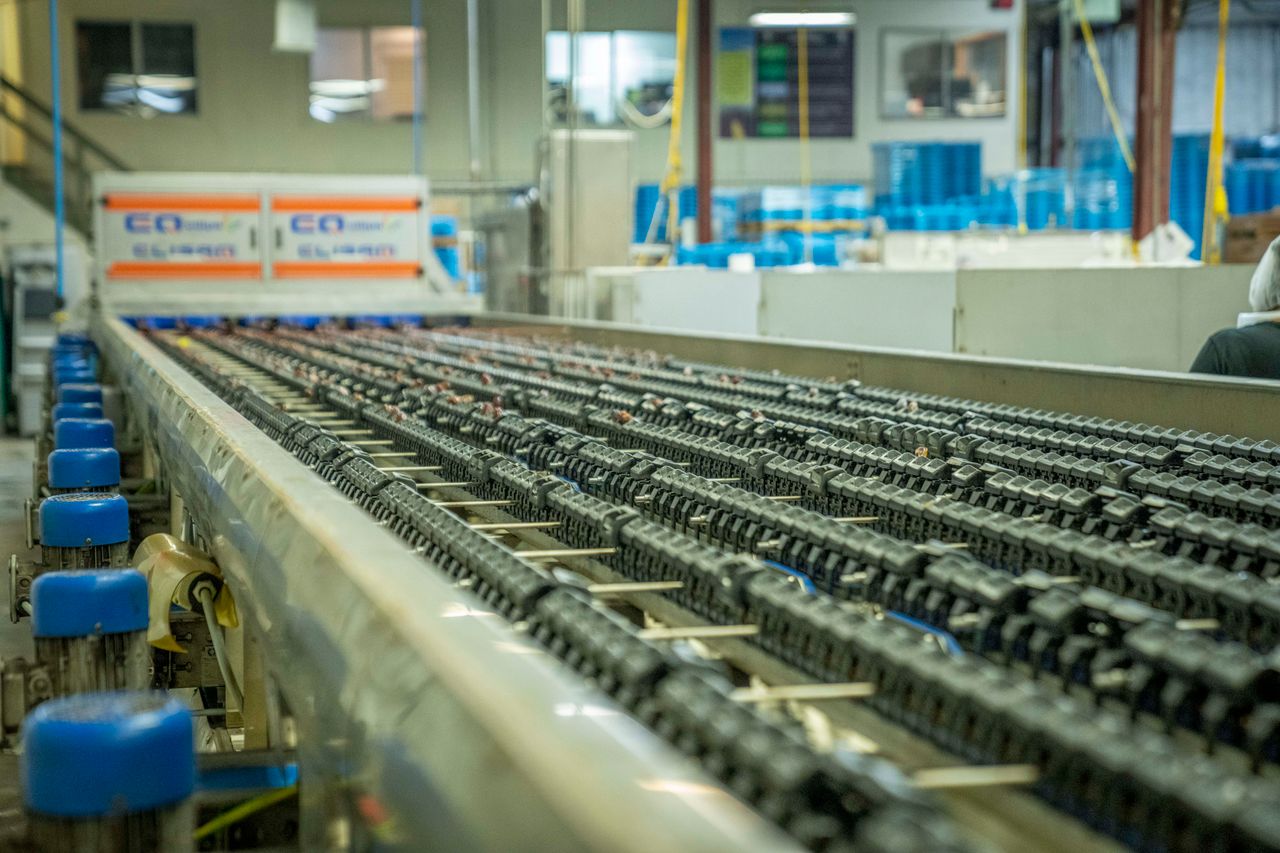
In high-speed conveyor environments, consistency and reliability are essential for maintaining throughput and minimising costly downtime. Industrial operations such as food processing, packaging and logistics rely on continuous movement, often under variable loads and demanding conditions. Within these systems, bearings are fundamental to ensuring smooth rotation, reduced friction and long-term mechanical stability.
Unlike general-purpose applications, conveyor systems require highly specific bearing configurations that can withstand sustained speeds, contamination risks and fluctuating loads without compromising performance.
Load Dynamics in Continuous Motion Systems
Conveyor systems operate under dynamic load conditions, where weight distribution can shift rapidly depending on product flow and system design. This creates a complex environment where bearings must handle both radial and axial loads simultaneously, often at high speeds.
In roller conveyors, for instance, uneven loading can lead to localised stress points, accelerating wear if the bearing is not correctly specified. Precision-engineered bearings designed for load balancing help distribute forces more evenly, reducing strain on individual components and improving overall system longevity.
Selecting the appropriate load rating and internal clearance is critical, particularly in high-throughput facilities where conveyors run continuously for extended periods.
Contamination Resistance in Industrial Environments
One of the primary challenges in conveyor systems is exposure to contaminants such as dust, debris, moisture or chemical residues. These elements can infiltrate bearing housings and degrade performance over time if not properly managed.
Sealed or shielded bearings are commonly used to prevent ingress, with advanced sealing technologies offering enhanced protection without increasing friction. In sectors such as food manufacturing, hygienic design is also essential, requiring materials and seals that can withstand regular washdowns and comply with industry standards.
Polymer-based bearing solutions are increasingly used in these environments due to their resistance to corrosion and reduced reliance on lubrication, making them particularly effective in clean or wet operating conditions.
Speed Optimisation and Heat Management
High-speed conveyor systems generate significant heat due to constant motion and friction. If not properly controlled, this heat can lead to premature bearing failure and reduced efficiency.
Bearings designed for high-speed applications typically feature optimised internal geometry and low-friction materials to minimise heat generation. In some cases, specialised lubricants are used to maintain performance under elevated temperatures while reducing energy consumption.
Thermal expansion is another important consideration, as it can affect internal clearances and lead to misalignment. Engineers must account for these factors during the design phase to ensure stable operation across varying temperature ranges.
Alignment Precision and Installation Accuracy
Even minor misalignment in conveyor systems can have a significant impact on bearing performance. Misaligned shafts or rollers create uneven load distribution, increasing friction and accelerating wear. Over time, this can lead to system inefficiencies and unplanned downtime.
To mitigate these risks, self-aligning bearings or units with flexible housings are often specified. These components can accommodate slight deviations without compromising performance. However, correct installation remains critical, as poor fitting can negate the benefits of even the most advanced bearing designs.
Routine inspection and alignment checks are essential to maintain optimal performance, particularly in systems subject to vibration or structural movement.
Energy Efficiency and Operational Cost Reduction
Energy efficiency is a growing priority in industrial operations, and bearing selection plays a direct role in reducing power consumption. Low-friction bearings contribute to smoother motion and require less energy to operate, particularly in high-speed conveyor systems where even small efficiency gains can have a significant cumulative impact.
Modern bearing designs often incorporate advanced materials and surface treatments that reduce rolling resistance while maintaining durability. This not only improves efficiency but also extends service intervals, reducing maintenance costs and downtime.
For large-scale operations, optimising bearing performance can lead to measurable savings over time, making it a key consideration in system design and upgrade projects.
Tailored Engineering for Conveyor Reliability
High-speed conveyor systems demand more than standard components; they require carefully specified solutions that address speed, load, contamination and alignment challenges simultaneously. Bearings are central to this equation, influencing everything from energy efficiency to system longevity.
By selecting application-specific bearing solutions and maintaining rigorous installation and maintenance practices, engineers can significantly enhance conveyor performance while reducing operational risks.
Featured image credit: by Mark Stebnicki via pexels.